
Executive Summary: In today’s fast-paced logistics environment, the choice between traditional labeling and reconfigurable systems can make or break operational efficiency. This guide illustrates why proactive operators favor rewritable labeling solutions, enhancing both agility and cost-effectiveness.
Moving Beyond the Sticky Mess: Adopting a "Rewritable" Mindset
Traditional labels treat your multi-million dollar racking system like a stone tablet, but modern logistics requires a whiteboard. This "scrape-and-clean" maintenance often drains time and resources. In contrast, a rewritable mindset embraces technologies that allow labels to be edited without removal, ensuring that operations can adapt swiftly to changing inventory needs without incurring cleanup costs.
Adopting this mindset streamlines logistics, enhances responsiveness to market demands, and reduces inventory errors that arise from improperly managed labeling.
Case Study in Agility: Prepping a 3PL Center for Peak Season
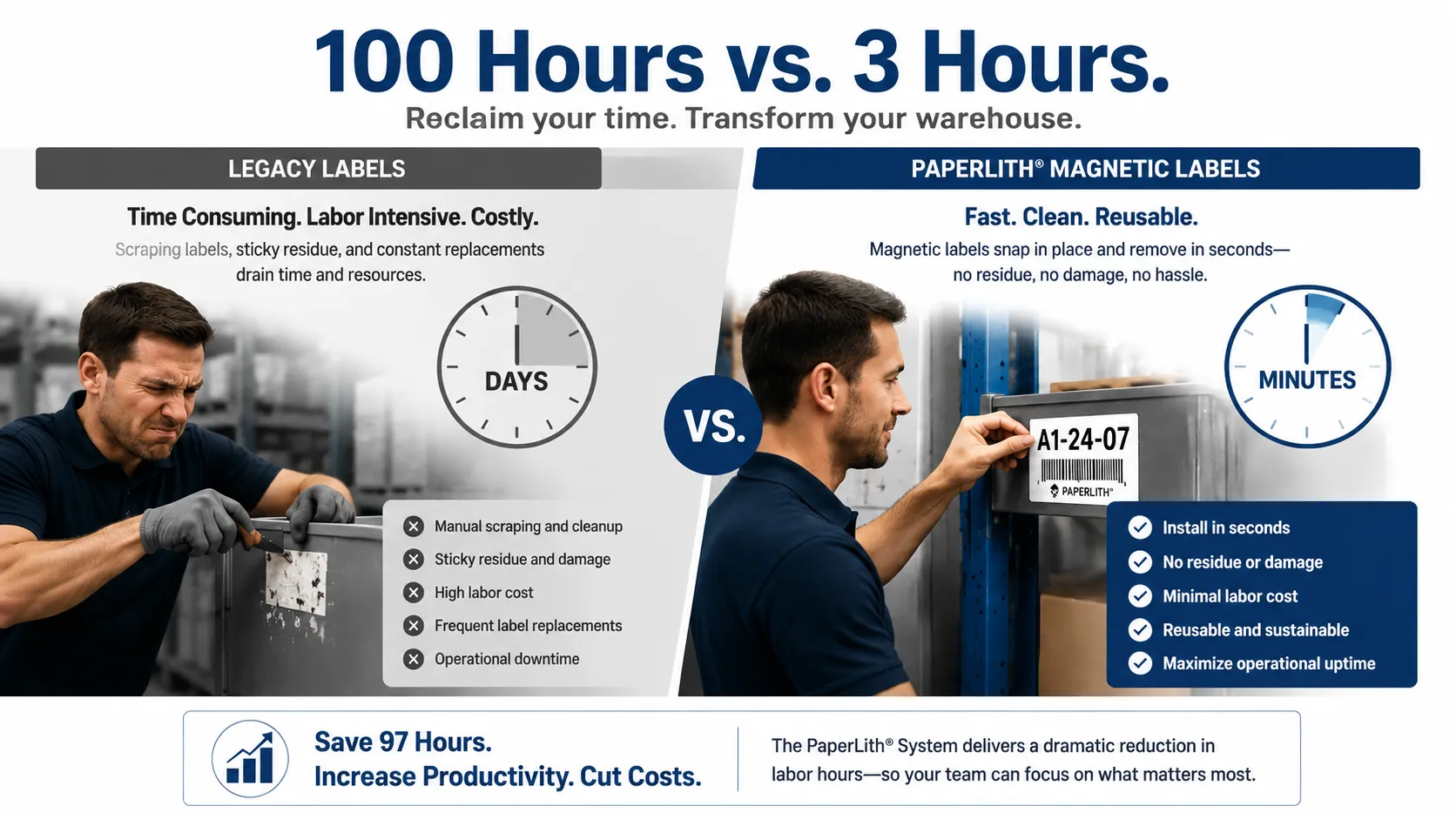
At a 3PL center I worked with, the transition to a rewritable labeling system revealed significant improvements during peak shipping seasons. Faced with 2000 slots, they relied on traditional labels, leading to excessive downtime. While the "scrape-and-clean" method would have consumed over 100 labor hours, the rewritable system completed the same re-slotting task in just under 3 hours.
This change saved over 90 hours of labor, directly converting into increased order processing capacity during critical sales events like Double Eleven and Black Friday. This illustrates the agility and efficiency that rewritable labeling technologies can bring to logistics operations.
The Dual Pillars of a Reconfigurable Infrastructure
Pillar I: Physical Mobility via Magnetic Carriers
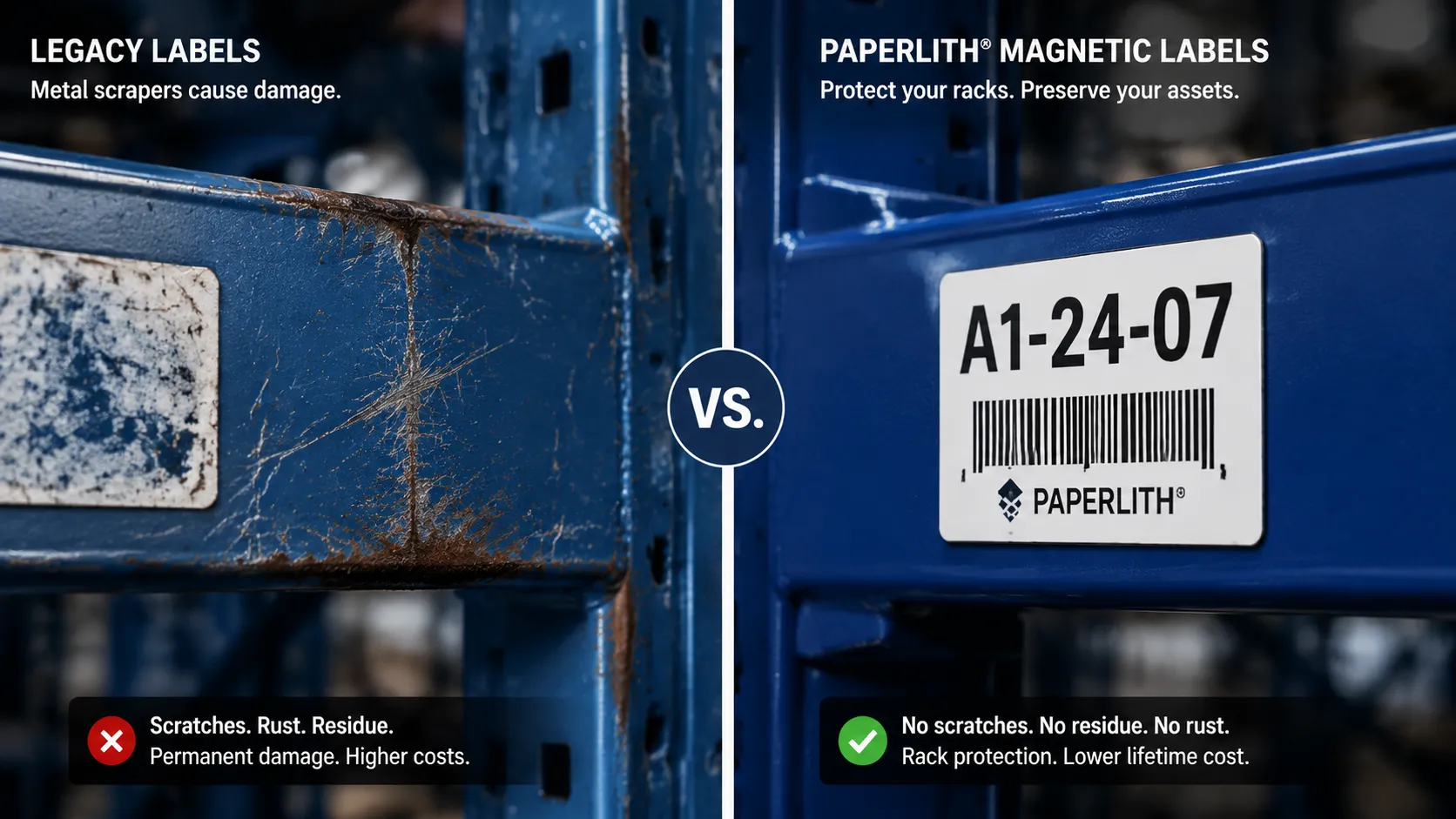
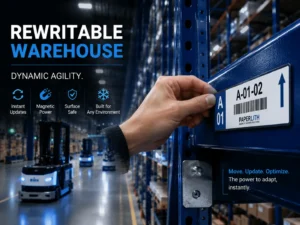
Magnetic carriers provide the asset preservation necessary for modern warehousing. They avoid damage to powder coating and rusting, key concerns for asset managers. By allowing for easy repositioning, magnetic carriers enhance flexibility without the drawbacks of traditional adhesive labels.
Pillar II: Instant Data Overwriting with Block-Out Technology
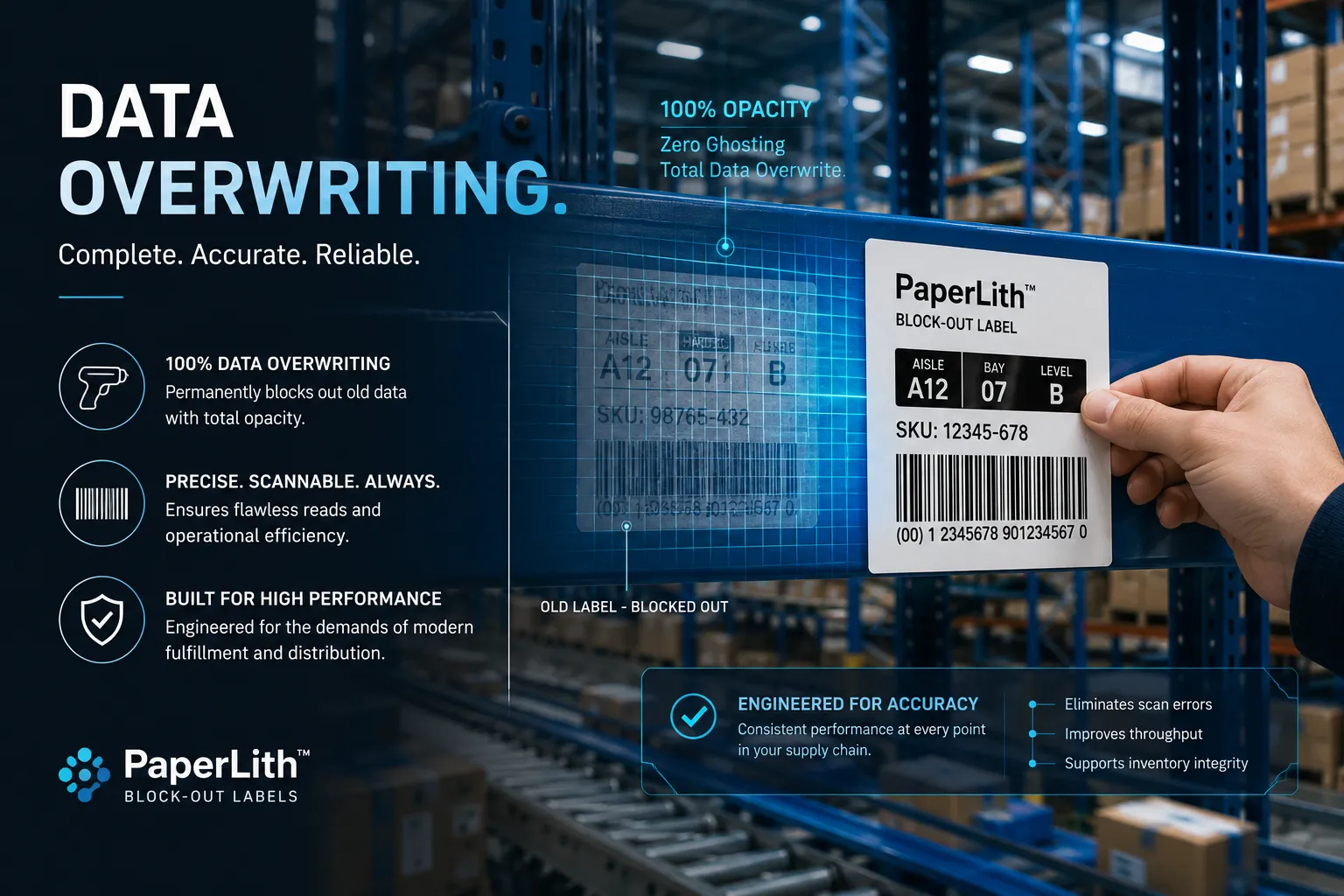
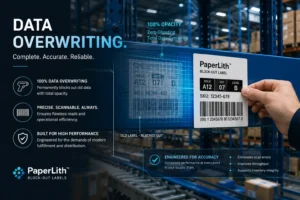
Block-Out technology complements this physical mobility by delivering instant data overwriting. With 100% opacity, it eliminates ghost images and ensures a clear scanning environment, crucial for IT and quality control departments. This direct application of materials science gives stakeholders confidence in a robust labeling solution.
Operational Dividends: Why the C-Suite and Floor Staff Alike Prefer Rewritability
Adopting rewritable labeling systems creates dividends across the organization. For the C-Suite, it represents enhanced agility, reduced downtime, and lower operational costs. Floor staff appreciate the simplification of their tasks, as they are freed from tedious scraping and re-labeling.
This collaboration improves overall productivity, creating a culture focused on efficiency and operational excellence.
Financial Logic: Total Cost of Ownership (TCO) vs. Legacy Labeling
Evaluating the financial implications of labeling systems reveals a clear advantage for rewritable technologies. Traditional labels generate ongoing expenses—labor, scraping tools, and wasted materials. Each label switch is an operational expense (Opex Drain).
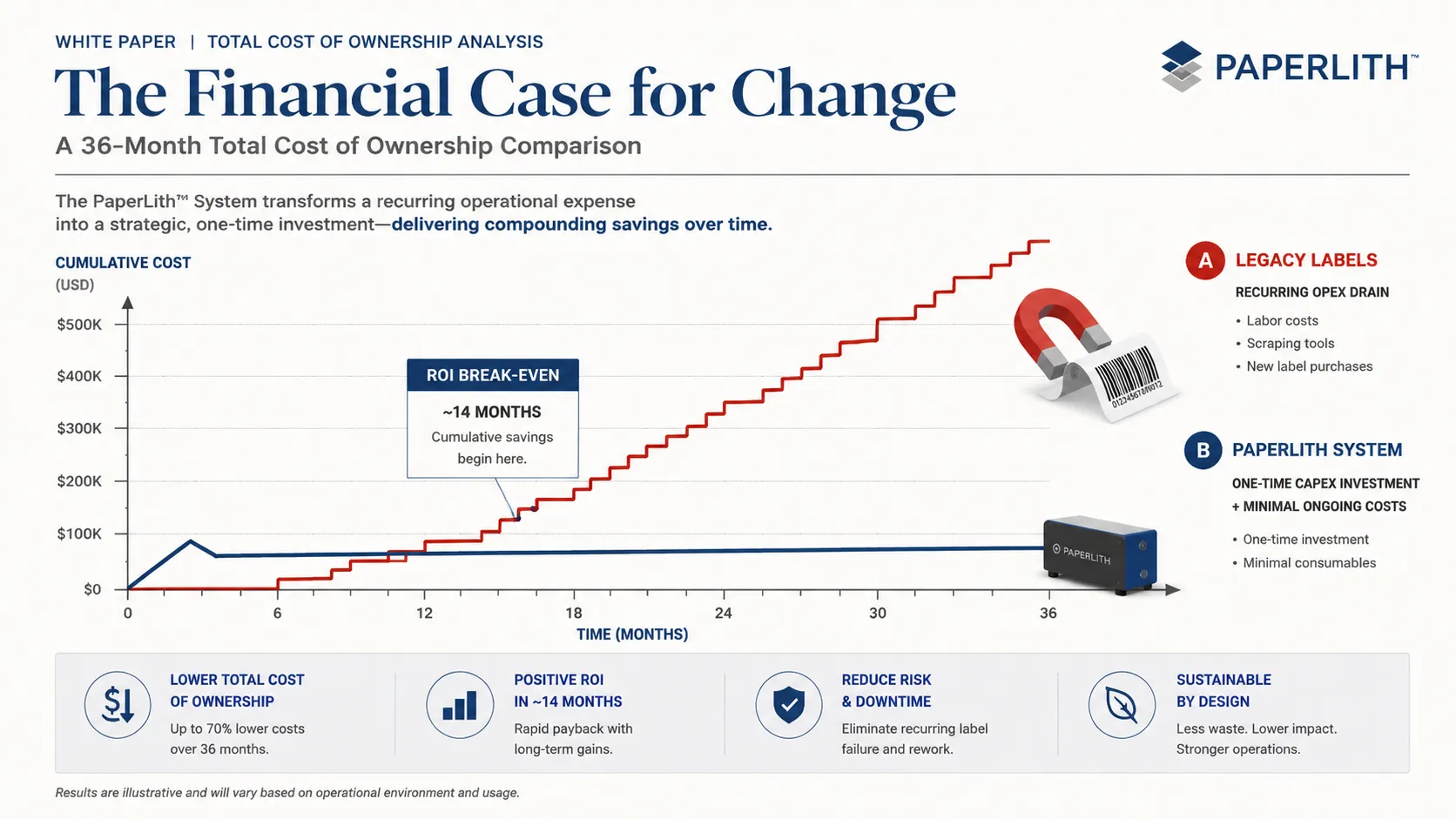
Conversely, a magnetic system is a one-time capital expenditure (Capex Investment) that can be depreciated and used long-term. This shift allows companies to realize savings over time, transferring costs from recurring expenses to a singular, sustainable investment.
Performance Metrics: Block-Out vs. Standard Overlay
| Metric | Standard Labels | Reconfigurable Labels |
|---|---|---|
| Labor Hours for Re-slotting | 100+ hours | < 3 hours |
| Asset Preservation | Moderate Risk | Minimal Risk |
| Opacity/Translucency | 75% - 85% (Ghost images) | 100% (no ghost images) |
| Scanning Accuracy (First-Read Rate) | 85% - 90% | 99.9% |
| Replacement Time (per location) | 3-5 minutes | < 10 seconds |
This comparison table highlights the substantial benefits of reconfigurable labeling systems over standard options, underscoring their operational effectiveness and economic advantages.
Conclusion: Stop Cleaning, Start Operating
Embracing a reconfigurable labeling system transforms operations from maintenance-focused to efficiency-driven. Proactive operators understand that the future of logistics lies in adaptable solutions. By choosing rewritable systems, organizations can eliminate the sticky mess and redefine their operational capabilities.You can contact PaperLith technical experts to fulfill more Customized Reconfigurable Labeling solutions.


.png)