
Executive Summary: In a world where operational efficiency is vital, Block-Out labels offer distinct advantages. They solve the "ghost image" problem and provide a clear path for flawless scanning. This guide explores how these labels ensure 100% accuracy in inventory management.
The Hidden Friction of Relabeling: The "Ghost Image" Problem
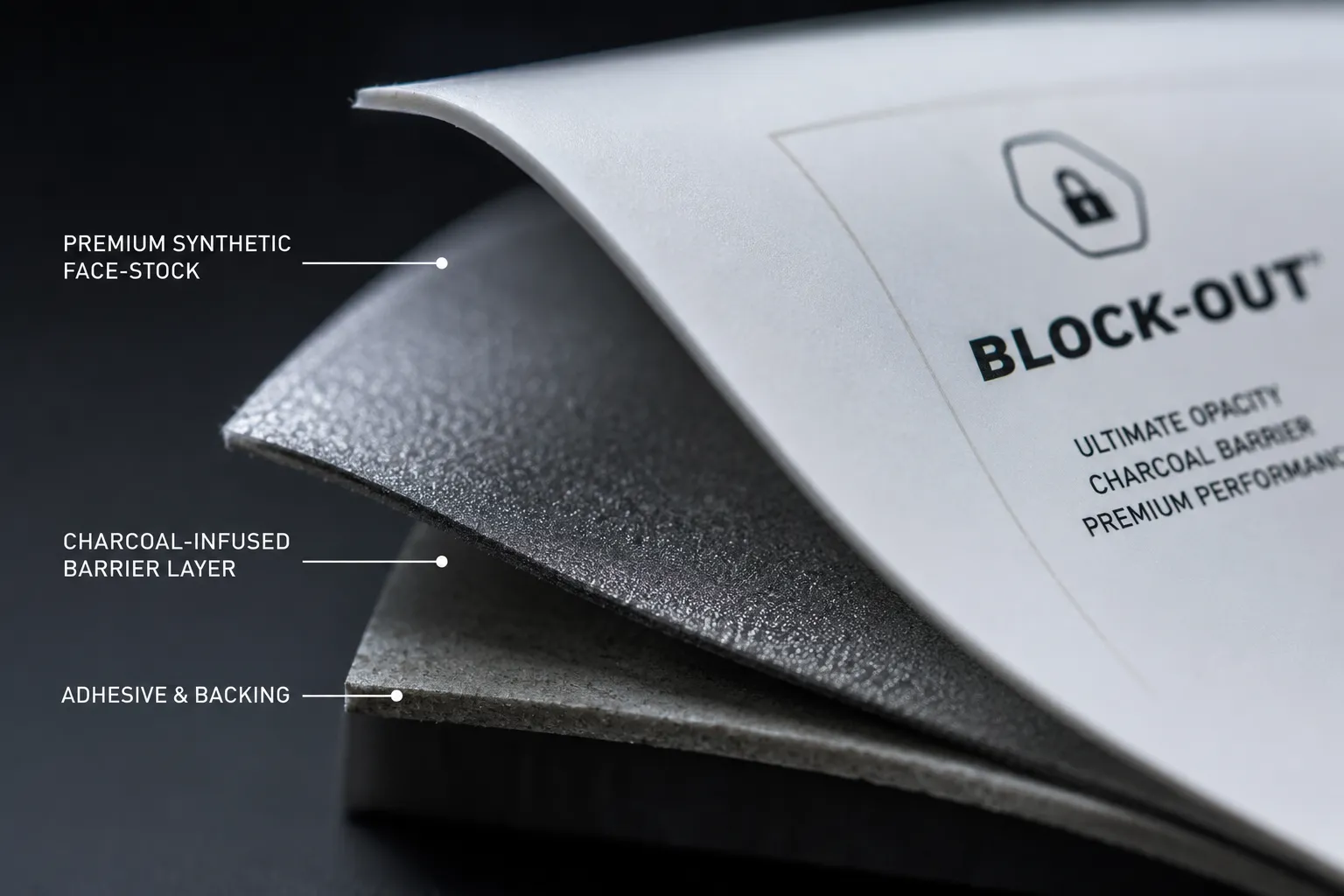
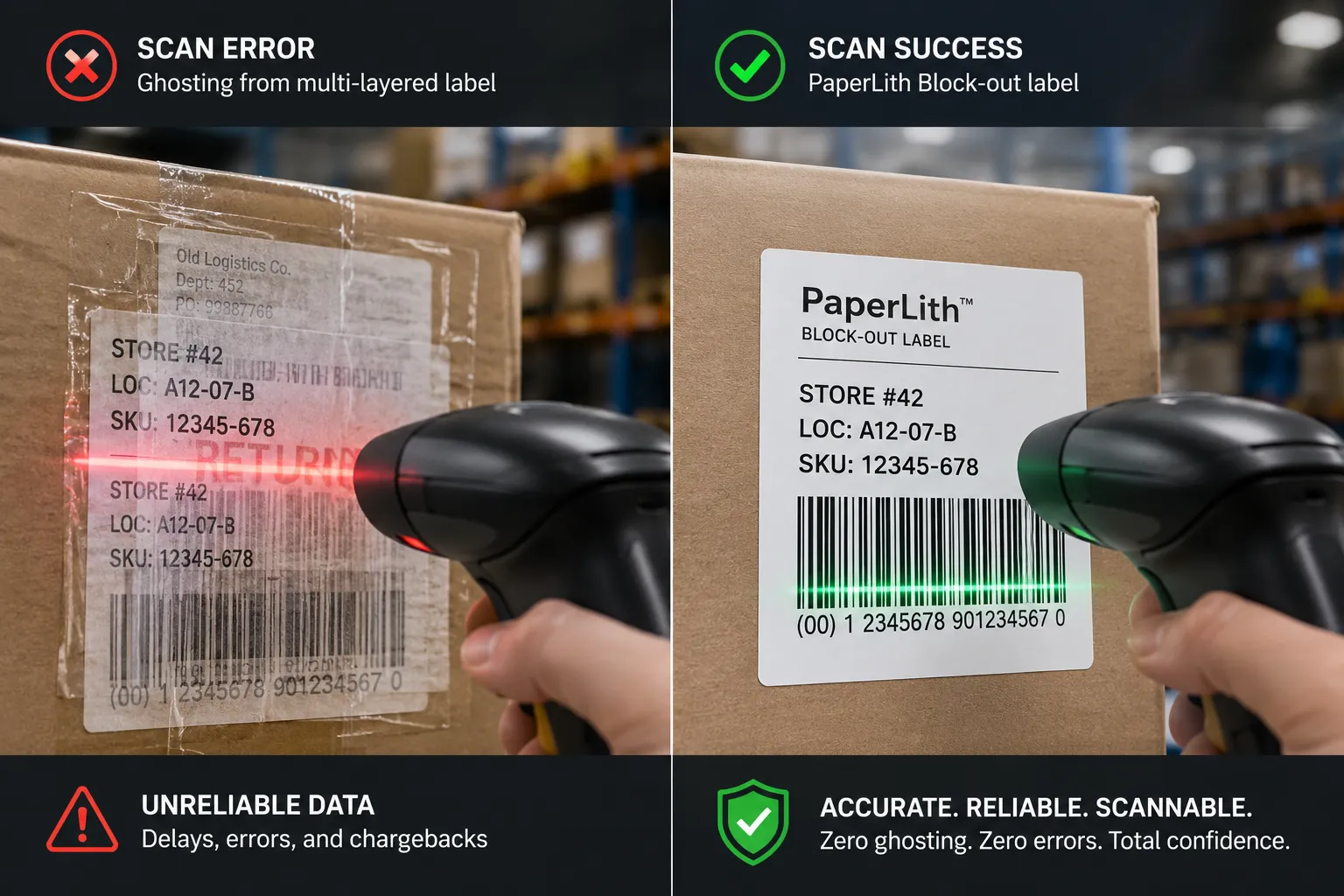
Relabeling can often create operational headaches. The "ghost image" problem occurs when remnants of old labels interfere with new ones, leading to scanning errors and inefficiencies. Standard paper labels are translucent to modern high-intensity scanners. Our barrier layer ensures zero light transmission, preventing the scanner from seeing the "reflection data" of the barcode underneath.
Understanding the impact of ghost images is crucial. These residuals can confuse barcode scanners, causing delays and inaccuracies. Implementing Block-Out labels helps eliminate this problem by providing a clean slate for every new label application, ensuring that inventory tracking is seamless and precise.
Opacity Engineering: The Multi-Layer Barrier Technology
Block-Out labels are designed with advanced opacity engineering to address the ghost image issue effectively. Using high-opacity charcoal or silver pigments, these labels create a robust barrier that blocks any visibility of the old label beneath, ensuring accurate and reliable scans.
Moreover, their compatibility with thermal transfer printing ensures that the barcodes printed on these labels remain crisp, enhancing clarity even in demanding warehouse environments. This direct application of materials science gives B2B purchasers confidence in a product that offers a real industrial barrier against scanning errors.
The Smooth Surface Mandate: Avoiding "Label Scarring"
Label scarring can damage surfaces and erode the integrity of the underlying material. A common issue in warehouses, this happens when labels are removed, leaving behind sticky residue or scratches.
Block-Out labels are engineered to ensure a smooth surface that prevents "label scarring," maintaining the integrity of the shelves they are applied to. The flatness of these labels is crucial, especially during long-distance scanning. Barcode scanners are highly sensitive to focus, and any unevenness caused by old label remnants can distort light reflections. By using Block-Out labels, you can ensure the accuracy of long-distance scans, thus increasing the first-read rate in your high-bay racking systems.
Operational ROI: "Overwriting" Data Without the Downtime
In today's fast-paced warehouse environments, minimizing downtime is crucial. Traditional labels require time-consuming scraping and cleaning during relabeling, adding unnecessary delays to operations.
Block-Out labels allow for efficient overwriting of data without the need for prior removal. This operational efficiency translates to significant ROI, freeing up labor for higher-value tasks. Chargeback mitigation is an additional benefit. In the B2B trade realm—especially with platforms like Amazon—unreadable barcodes can lead to rejected shipments. Using Block-Out labels not only saves the cost of scraping but also acts as insurance against inventory acceptance issues.
Financial Logic: Transitioning to Block-Out labels shifts your budget from recurring costs associated with traditional labels to a streamlined process that enhances both workforce allocation and operational effectiveness.
Performance Metrics: Block-Out vs. Standard Overlay
| Metric | Standard Overlay Labels | Block-Out Labels |
|---|---|---|
| Opacity/Translucency | 75% - 85% (Susceptible to Reflection) | 100% (High-opacity barrier layer) |
| Scanning Accuracy (First-Read Rate) | 85% - 90% (Prone to "ghost images") | 99.9% (First-pass recognition) |
| Surface Integrity | Uneven layers over time | Maintains flatness, no distortion |
| Replacement Time (per location) | 3-5 minutes (requires cleaning) | < 10 seconds (Direct overwrite) |
| Asset Risk | High (Potential surface damage) | Low (Physical protection, minimal risk) |
| Data Rewrite | Destructive | Non-destructive (Rewritable) |
This comparison table highlights the clear advantages of Block-Out labels over standard overlay options, focusing on how they enhance operational efficiency and scanning reliability.
The Consultative Approach
Are you ready to eliminate the ghost image problem and achieve flawless inventory management? At PaperLith, we provide tailored solutions to meet your unique labeling needs.
While Block-Out labels provide a solution for static locations with changing data, they are one part of the Rewritable Warehouse ecosystem. Stay tuned for our final piece, where we combine physical mobility and data overwriting into a total agile infrastructure strategy.
Request a Consultation today to discover how Block-Out labels can transform your inventory systems. Experience the benefits of enhanced accuracy, reduced downtime, and improved operational efficiency by contacting us for a personalized assessment.


.png)